If you’re still treating LinkedIn organic as a “nice to have,” then this LinkedIn organic playbook is going to change how you think about your feed.
In 2026, the brands winning on LinkedIn aren’t just running strong ads, they’re building demand before they ever pay for a click.
Buyers research quietly before responding to ads or outbound. They check your profile, skim your posts, and look for signs that you have a real point of view. That familiarity lowers their mental “spam radar” when your paid campaign enters their feed.
Organic creates warmth. Paid creates scale. To get results next year, you need both working together.
What Changed on LinkedIn This Year (and What That Means for Brands)
LinkedIn shifted again this year, and the changes favor brands willing to get specific.
→ Niche expertise is now king. The algorithm rewards depth, clarity, and content that teaches something worth saving.
→ Attention spans dropped. Tight storytelling performs better than jargon-packed posts.
→ Executives outperform company pages. People trust people more than logos.
→ Paid costs rose slightly. Not enough to cause concern, but enough to make trust essential. When buyers already know you from organic, CPL drops because they’re more prepared to click.
The 3 Organic Formats Driving the Most Engagement in 2026
→ Narrative “teach-through-story” posts
These posts stand out because they build emotional connection and show how you think, not just what you sell. Buyers remember stories, and they remember the person telling them.

→ Carousels: the save-generating machine
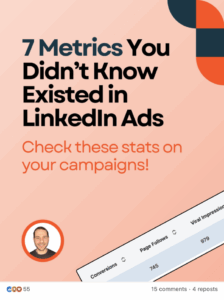
Carousels dominate because they increase dwell time, make information easier to digest, and drive saves, LinkedIn’s strongest quality signal. They also create excellent retargeting seeds for paid campaigns.
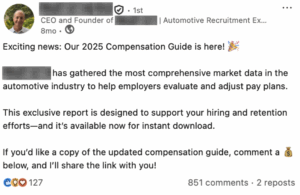
→ Comment-to-download posts + micro-CTAs
These posts act like soft lead magnets without forcing users off-platform. Low friction leads to high-quality engagement that paid can later retarget.
The Organic → Paid Feedback Loop: How They Work Together
→ Organic warms; paid accelerates
Buyers who’ve already seen your organic content convert at lower CPLs. Every save, click, and comment adds people to the audience that your ads will reach again.
→ Paid validates your best organic messages
When a post takes off organically, it’s an early signal that it will perform well as an ad. Paid gives statistical proof of which hooks, angles, or messages truly resonate.
→ A consistent POV multiplies trust
When organic and paid share the same point of view, buyers feel like they’re hearing one unified message. This increases trust, CTR, and lead quality.
How to Build a Monthly Organic Strategy That Supports Your Paid Campaigns
Step 1: Create 3–5 content pillars aligned with your paid messaging
Examples include problem education, customer stories, behind-the-scenes thinking, and simple frameworks or teachings.
Step 2: Repurpose each pillar across formats
One idea fuels several formats: a text post becomes a carousel, a carousel becomes a short video, and a video becomes a narrative post. This reinforces memory and message consistency.
Step 3: Sync posting cadence with your paid calendar
Warm your audience organically one to two weeks before launching a new paid campaign. Share founder or expert POV the same week your retargeting ads go live. Post content that supports the offer buyers will soon see in paid.
Step 4: Track shared KPIs
Key organic metrics: saves, comments, profile clicks, DM volume. Key combined metrics: retargeting pool growth, CPL improvements, and conversion rate lift.
What Not to Do (Because It Hurts BOTH Organic and Paid)
→Avoid posting generic motivational content with no real point of view.
→Avoid saying different things in organic vs paid, it confuses buyers quickly.
→Avoid chasing reach over relevance.
→Avoid treating organic as “brand awareness only.” Organic should absolutely drive leads, trust, and pipeline readiness.
Final Takeaway: Organic and Paid Are Your New Growth Flywheel
If you want a strong pipeline in 2026, you can’t depend on paid alone.
Organic builds familiarity. Paid delivers reach and repetition. Together, they create a compounding growth cycle that improves trust, lowers CPL, and fills your pipeline with better buyers.